Rectangle diagonals and the limits of a square-corner check
A panel 0.9 m wide and 1.2 m high has a 1.5 m diagonal if its corners are square. Here is how to calculate that distance and compare it with a measurement.
Separate the ideal rectangle from the object
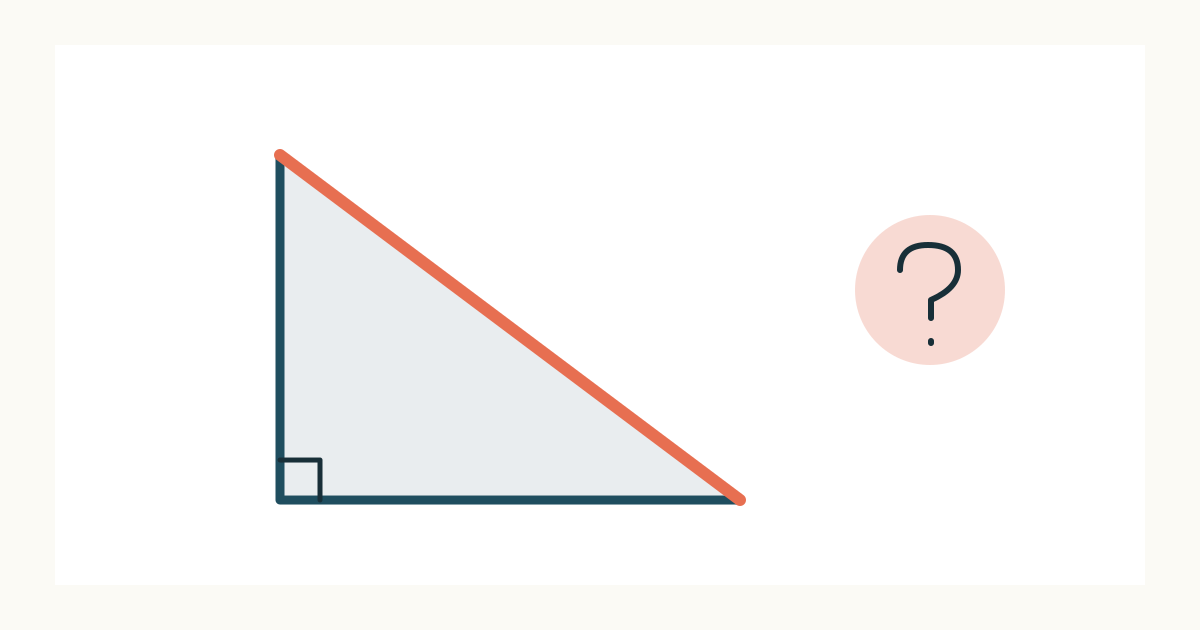
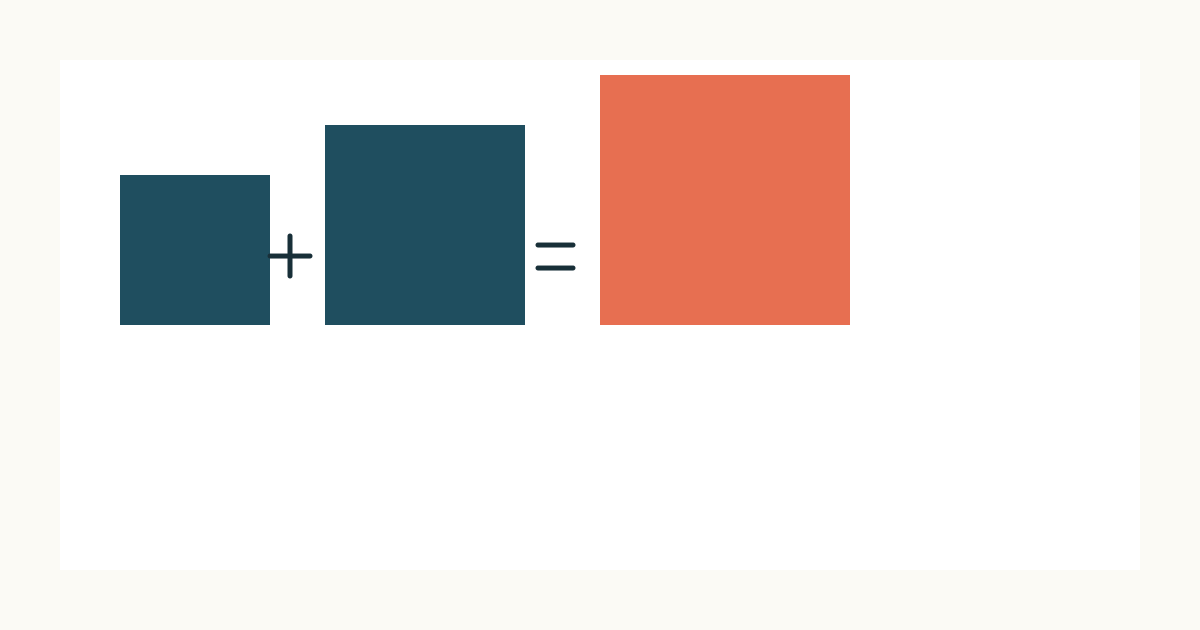
An ideal rectangle has four right angles. Joining opposite corners divides it into two congruent right triangles, each with the width and height as legs. Its diagonal is therefore d = √(w² + h²). This is a model of the geometry, not a measurement of the object in front of you. If the corner is skewed, the width and height alone are insufficient to find the diagonal with the Pythagorean theorem.
I first ask where the dimensions were taken. Outside dimensions, inside clear openings and distances between marked center points can describe different rectangles. A thick frame makes that distinction obvious, but even a thin panel can introduce edge or corner ambiguity. Use the same reference points for the width, height and diagonal comparison. A mathematically correct answer based on different reference points can still be an irrelevant answer.
A panel diagonal, including its intermediate squares
Consider a hypothetical rectangular panel with width 0.9 m and height 1.2 m. The squared lengths are 0.81 m² and 1.44 m². Their sum is 2.25 m², so d = √2.25 = 1.5 m. This is another scaled 3–4–5 triangle, with scale factor 0.3. The perimeter of the rectangle is 2 × (0.9 + 1.2) = 4.2 m; do not confuse that with the perimeter of the triangular half, which is 0.9 + 1.2 + 1.5 = 3.6 m.
A second panel, 0.8 m by 1.1 m, has diagonal √(0.64 + 1.21) = √1.85 ≈ 1.3601 m. There is no convenient integer triple here. Rounding that value to 1.36 m is reasonable only if that display precision matches the purpose of the calculation. The calculation does not establish the precision of a ruler, the straightness of an edge or how accurately a corner has been marked.
| Width | Height | Squared sum | Diagonal |
|---|---|---|---|
| 0.9 m | 1.2 m | 2.25 m² | 1.5 m |
| 0.8 m | 1.1 m | 1.85 m² | ≈ 1.3601 m |
| 24 in | 32 in | 1,600 in² | 40 in |
| 60 cm | 80 cm | 10,000 cm² | 100 cm |
Convert before comparing
With a width of 60 cm and a height of 0.8 m, the common lengths are 0.6 m and 0.8 m, giving a 1 m diagonal. The calculator can perform this conversion if each input is labeled with its physical unit and the output is also physical. Unitless numbers instead assume a shared unspecified scale. Entering 60 and 0.8 without units would describe a very narrow triangle, not the intended panel.
For inches, the exact conversion is 1 in = 0.0254 m; one foot is 12 in. A 24 in by 32 in rectangle has diagonal 40 in = 1.016 m. Keep linear and squared units separate. Its rectangle area is 768 in², while the triangular half has area 384 in². The calculator reports the right triangle’s area, not the whole rectangle’s area. Doubling that result is appropriate only when you are specifically working with the two halves of the same rectangle.
A diagonal on a coordinate grid
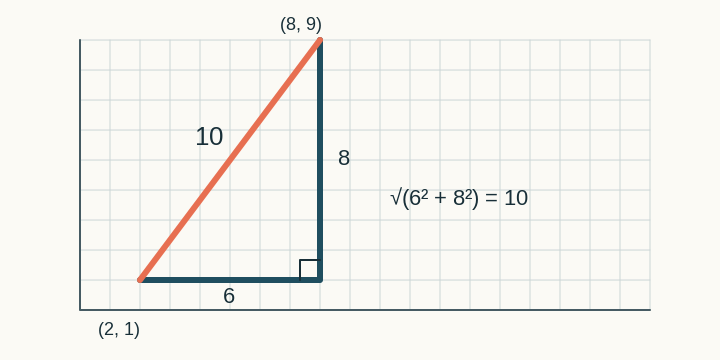
The same operation measures straight-line distance between coordinate points. From (2, 1) to (8, 9), the horizontal change is 8 − 2 = 6 and the vertical change is 9 − 1 = 8. The connecting distance is √(6² + 8²) = 10. The route that follows the horizontal and vertical grid lines is 6 + 8 = 14, which answers a different question.
Negative coordinates do not make a negative distance. For points (−2, 5) and (4, −3), the changes are 6 and −8; their squares are 36 and 64, again giving 10. Because the squares remove the signs, you can enter the absolute changes as positive legs. The OpenStax distance-formula derivation connects these perpendicular differences to the hypotenuse. On a map with distorted axes or different axis scales, first establish what the coordinate units represent.
What three measured lengths can tell you
The converse of the theorem lets ideal side lengths test the right-angle relationship: the square of the longest side should equal the sum of the other two squares. The tool’s three-side mode uses the largest supplied value as the candidate hypotenuse and reports a scale-normalized squared residual. This permits the same numerical comparison whether the common unit is metres or millimetres.
A measurement is not an exact ideal length. Tape placement, edge shape, reference points and rounding can all affect the values. The tool’s threshold of 0.0000000001 is a numerical arithmetic tolerance, not a permitted physical discrepancy. Do not use its pass or fail message as a construction specification, a structural assessment or a safety certificate. In particular, two equal diagonals alone do not prove that an arbitrary four-sided shape is a rectangle; the shape and its other constraints matter.
Record a comparison you can understand later
- State whether the inputs are an ideal rectangle or measured lengths.
- Use consistent corner or center-point references for all dimensions.
- Label physical units and preserve the original values.
- Calculate the predicted diagonal under the right-angle assumption.
- Keep any measurement comparison separate from the numerical tolerance.
The local comparison history stores up to eight input sets, so you can contrast a nominal design dimension with a measured input without silently replacing either. Restoring a row recalculates from its original lengths and units. Export CSV if you need a durable file; browser storage is local and can be disabled or cleared. The missing-side guide helps when a diagonal and one edge are known instead. The triples guide explains convenient reference values without making every real measurement conform to an integer pattern.
Questions and answers
Does the tool report a rectangle area?
It reports the area of the right triangle. A rectangle split along its diagonal has twice that area.
Do equal diagonals prove any quadrilateral is a rectangle?
No. Additional constraints on the shape are needed; equal diagonals alone are insufficient.
Is the numerical tolerance a construction allowance?
No. It is an arithmetic threshold for floating-point comparison, not measurement uncertainty or a safety standard.